
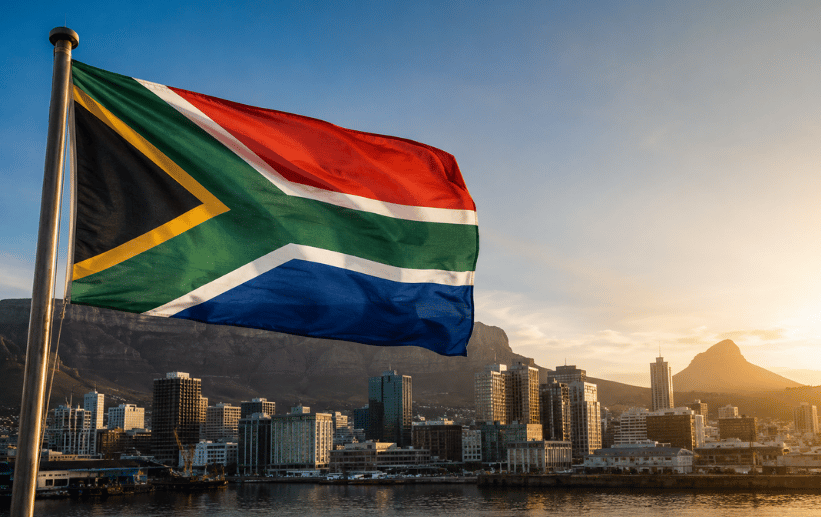
There’s a new mood in South Africa. It’s hard to measure, but we certainly feel it.
Across our towns and across the country, the people we encounter on the streets, interact with socially, and do business with, are showing a new confidence and optimism.
Not too long ago, there was feeling of friction, anxiety and even anger in many of these interactions. Now, I feel, South Africans by and large are showing their natural friendliness and good humour again. Our resilience has seen us through an exceedingly difficult time.
I say this with humility, acknowledging that things can change quickly. But at the same time, we are appreciating a shift that nobody can deny.
This comes amid global turmoil. The war in the Middle East continues; trade tariff disputes are ongoing, if spoken of little now, and the world’s fuel supply is threatened.
Yet South Africa, for a change, feels like a good place to be.
“We help each other; we’re a resilient lot”
Although Johannesburg’s infrastructure is crumbling, an associate of Dolphin Bay’s who lives there said that she, too, feels this optimism. “Jo’burg is reflective of South Africa, and people have definitely begun to feel more positive here. There’s a lot that’s still not working but we grit our teeth, make plans to move ahead, and we help each other.
“We’re a very resilient lot.”
What’s behind this improvement? I believe it starts with politics: improved confidence in the Government of National Unity, which shows that working together is the best approach: that it’s not a question of “them vs us” but “all of us”. People feel better represented and that accountability has improved.
Our institutions, like the National Treasury, are also functioning properly again. During the global economic downturn, they are protecting us from the worst of the extreme market volatility.
The recent National Budget was upbeat, and the Rand has been especially resilient, sticking around the R16,50/$ mark after hitting R19/$ just a year ago. This is despite the global trade and tariff wars, the conflict in the Middle East, and the sky-rocketing fuel price.
Statesmanlike on the world stage
We’re certainly not isolated from major global events, but we’re finding a way to weather the global negativity.
And while some countries’ leaders are making headlines for saying foolish things, South Africa’s leaders are, for the most part, looking dignified and statesmanlike on the world stage.
I have mentioned an improved “mood” and “feeling”; nonetheless, the data we have right now is mixed. On one hand we’re hearing stories about the prospect of “stagflation”, but at the same time South Africa is reported to be entering a “new phase of growth”. The messages are conflicting. So where are we really?
Nedbank’s Happiness Survey, − granted it was conducted in late 2023 − showed that most South Africans are “flourishing” or “flourishing a lot”
Business and middle‑class confidence have clearly rebounded – the latest RMB/BER business confidence index is at its highest since 2021. Middle- and high-income households’ confidence, too, has improved in the past quarter, due to factors including lower interest rates, strong market performance, and a firmer Rand.
Unfortunately, low-income households have experienced a notable decline in confidence, which economists attribute to weak job creation and tighter social grant compliance measures, which diminished incomes for some families.
“Flourishing”
Other indicators give a different picture. Nedbank’s Happiness Survey, − granted it was conducted in late 2023 − showed that most South Africans were “flourishing” or “flourishing a lot” (scores of 4,15 out of five), due to fulfilling relationships and feeling their lives were meaningful. We believe that this “flourishing” is highly likely to have continued due to South Africans’ strong social connections.
Our industry is reaping the benefits of the general upswing in confidence. More orders are being placed, timber treatment companies are continuing to invest in their businesses, and more people are talking more positively about the country and its prospects.
I saw a report recently that recruiters are seeing a 70% increase in the numbers of South Africans living abroad who are actively looking to return home.
The mood in South Africa now reminds me of 1994, when our newly democratic “Rainbow Nation” was riding a wave of positivity.
Then the Mandela years turned into the Mbeki years, which turned into the rot of the Zuma years, leaving President Ramaphosa with a lot to fix. Now, the evidence is that the Government of National Unity is gradually repairing the damage that was done.
We feel this story is, in some ways, be a bit simplistic… We choose to focus on the healing of these wounds, without being ignorant of their severity
It’s a big job and although there has been substantial progress, as this newsletter has previously noted, it will take time.
We feel this story is, in some ways, be a bit simplistic and even contradicts the current headlines about xenophobia, the Phala Phala couch-money scandal, and talk of Ramaphosa’s impeachment.
We live in an imperfect world, and there always will be wounds. We choose to focus on the healing of these wounds – without being ignorant of their severity – and to do our part.

- PRO-TREAT APP: “YOUR PLANT IN YOUR POCKET” - September 2, 2026
- DARGLE POLES JOINS THE QUALITY PLEDGE - September 2, 2026
- OPERATION VULINDLELA RAISES HOPE FOR RAIL REFORM - September 2, 2026



Comments are closed.